

London Neighbourhoods
Clerkenwell
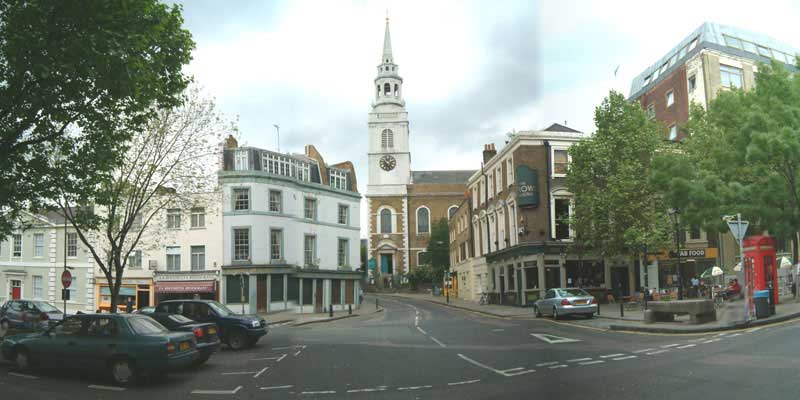
Clerkenwell is one of the lesser known areas of inner London, and is well and truly off the tourist map, but has an interesting history and enough unique corners, not to mention its many nice restaurants and bars/pubs, to make it worth a visit dor those seeking somewhere a little different to go. A neighbourhood of the inner borough of Islington, it is composed of the parishes of St James and St John.
The area developed around the Nunnery of St. Mary (replaced by St. James, Clerkenwell Green, in 1792) and the Priory of St. John of Jerusalem, both founded in the 12th century. Its name literally means “clerks’ well”, a reference to a well that still exists on Farringdon Road that was the area's early water supply. The well adjoined the nunnery and was the scene of medieval miracle plays and Bible readings by the priory clerks. Though outside the walls of the City of London but still close to it, the parish flourished in the Middle Ages, its fresh air, fertile land, meadows and orchards and a sizeable river nearby (the Fleet, now interred) were seen as an ideal environment by religious institutions.
Until the dissolution of the monasteries (1536–39), the Priory of St. John was a headquarters of the Knights of Malta (Hospitalers). Only the 16th-century gatehouse, known as St. John’s Gate, and the priory’s 12th-century crypt remain. Part of the well remains visible, incorporated into a 1980s building called Well Court. It is visible through a window of that building on Farringdon Lane. Access to the well is managed by Islington Local History Centre and visits can be arranged by appointment.
Clerkenwell grew into a thriving community with the overflowing population of 17th century central London. In the mid-17th century it was home to many Huguenot refugees, merchants, and tradesmen, as well as to such uncouth locales as the Red Bull Theatre. It was a focus of suffering during the Great Plague of London. The watchmaking and watch repairing trades were once of great importance, particularly in the area around Northampton Square. In the 20th century, Clerkenwell became known as a centre for architecture and design. After the Second World War the area suffered from industrial decline and many of the premises occupied by the engineering, printing publishing and meat and food trades fell empty. A general revival and gentrification process began in the 1980s, and the area is now known for loft-living in some of the former industrial buildings. It is also home to many professional offices as an overspill for the nearby City of London and West End.
Clerkenwell is situated in Central London, just north and a bit west of the City, just a few Tube stops from Oxford Street and a short walk from the Square Mile. The area is bordered by Bloomsbury, Holborn, Islington and Kings Cross and is also home to City University, as well as the BPP University Law School, while the neighbourhood’s Farringdon Station provides an easy link to the London Underground and main line National Rail.

Online Walks

Things to See and Do
Walking routes round Clerkenwell are usually only short, but this district is packed with historic and interesting sites. The list is endless, but it includes St Bartholomew’s Hospital, the magnificent church of St Bartholomew the Great, Smithfield Meat Market, Charterhouse Square, The Charterhouse, the William Wallace Memorial, Spa Fields, Saffron Hill, Ely Place, Cloth Fair, the St John Gatehouse and Museum and Clerkenwell Green.
Clerkenwell’s traditions of making clocks and watches began in the 18th century and survive in a village-like district with a mixture of housing, workshops, and business services for the adjacent City of London. Mentioned in Shakespeare’s sonnets and popping up in works by Charles Dickens, William Thackeray and William Morris, Clerkenwell has always been a hive of creativity. This heritage lives on, and these days the area is a design destination and has more creative businesses and architect firms per square mile than anywhere else in the world. Consequently it's become a bit of a mecca for young and trend conscious professionals to live. At the weekend, residents make the most of the area’s bustling markets, restaurants and bars, while enjoying a quick commute to the heart of the City of London during the week.
Notable areas include Clerkenwell Green, beside which Oliver Cromwell once lived, which is the natural and historic centre of the neighbourhood, as well as Clerkenwell Road and St. John Street, where many of the best art galleries, restaurants, bars and pubs are located. In Charles Dickens’ novel Oliver Twist, Fagin and the Artful Dodger teach Oliver how to pickpocket in Clerkenwell Green. Clerkenwell has its own “Little Italy”, a section that recalls immigrations of the 19th and early 20th centuries, that has made a major contribution towards it becoming one of the city's best destinations for foodies. The community had mostly dispersed by the 1960s, but the area remains the spiritual home of London's Italians, and is a focal point for more recent Italian immigrants, largely because of St Peter's Italian Church in nearby Saffron Hill.
Some of London’s best and oldest restaurants and pubs, including Modern Pantry, The Green, The Jerusalem Tavern and The Zetter Hotel Restaurant & Bar are located in Clerkenwell, where it’s easy to take full advantage of easy access to the fresh, high-quality ingredients available at nearby markets. Clerkenwell is home to three of London’s finest food markets. Exmouth Market is located in the heart of Clerkenwell, along a street lined with trendy cafes and restaurants like Caravan and Moro. Smithfield Market is the largest wholesale meat market in the UK. For the true Smithfield experience, visit early in the morning as the traders set up shop. Whitecross Street Market is popular with City workers looking for a tasty takeaway lunch. Leather Lane Market is home to an eclectic array of stalls, selling everything from handbags to freshly squeezed juices.
Sadler’s Wells Theatre is one of the world’s best contemporary dance venues and its cutting edge original performances draw half a million people to its shows every year. The nearby Barbican centre, meanwhile, can boast a large range of theatre, cinema, music and arts offerings. The award winning Clerkenwell Design Week showcases the best of local and international design in a series of annual events and exhibitions.
Clerkenwell Green has historically been associated with left-wing radicalism, from the Lollards in the 16th century, the Chartists in the 19th century and communists in the early 20th century. In 1867, St Marys, which had been turned into a prison, was the setting of a devastating ‘gunpowder plot’, the Clerkenwell explosion, in which the Fenians tried to blow up the walls to free two prisoners. They failed, but killed 12 people in the process. The world’s first May Day march was held here in 1890. It remains the traditional meeting point for May Day gatherings. Legend has it that Russian Bolsheviks Vladimir Lenin and Joseph Stalin fomented revolution at what is now the Crown Tavern on Clerkenwell Green in 1903. Lenin spent a lot of time at Clerkenwell Green when in London, although he lived at Percy Circus a little way to the north. An attractive Georgian building near the Green houses the Marx Memorial Library.
Clerkenwell's tradition of left-leaning publication continued until late 2008 with The Guardian and The Observer having their headquarters on Farringdon Road, a short walk from the Green. Their new offices are a short distance away in King's Cross. In 2011, an anti-cuts protest march departed from Clerkenwell and ended with a rally at Trafalgar Square demanding trade union rights, human rights and international solidarity.
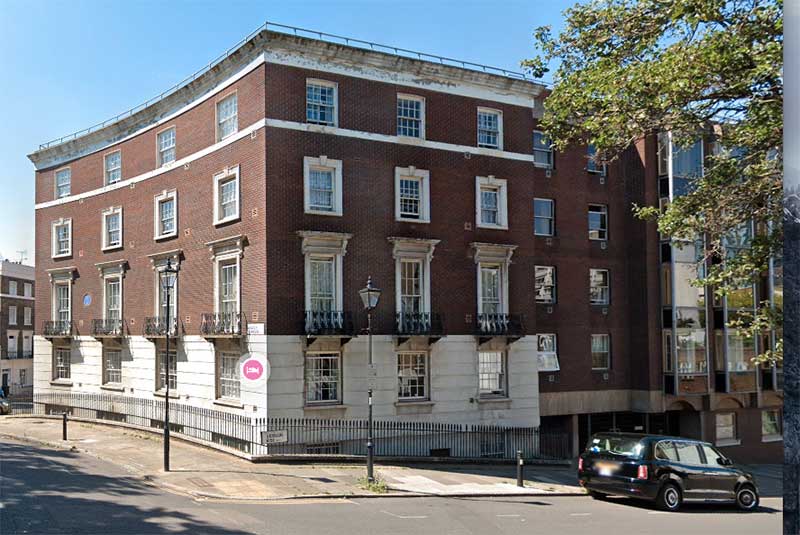
Russian revolutionary Vladimir Ilich Lenin spent time in exile in London. He and his wife, Nadya Krupskaya, lived from April 1902 to May 1903, in two unfurnished rooms at 30 Holford Place (now Holford Street). In 1908, Lenin later stayed at 16 Percy Circus, Clerkenwell, and then for more than a month at what is now 36 Tavistock Place (it was 21 at the time), Bloomsbury. London legend has it that Lenin and Josepf Stalin first met in the pub which is now the Crown Tavern, on Clerkenwell Green, in 1903 when Stalin came to London after escaping from Siberia. At the time, Clerkenwell was a hotbed of leftism.
Design by W3layouts